
The Price of Staying: Linda Kibombo on Surviving and Leading in Uganda’s Newsrooms

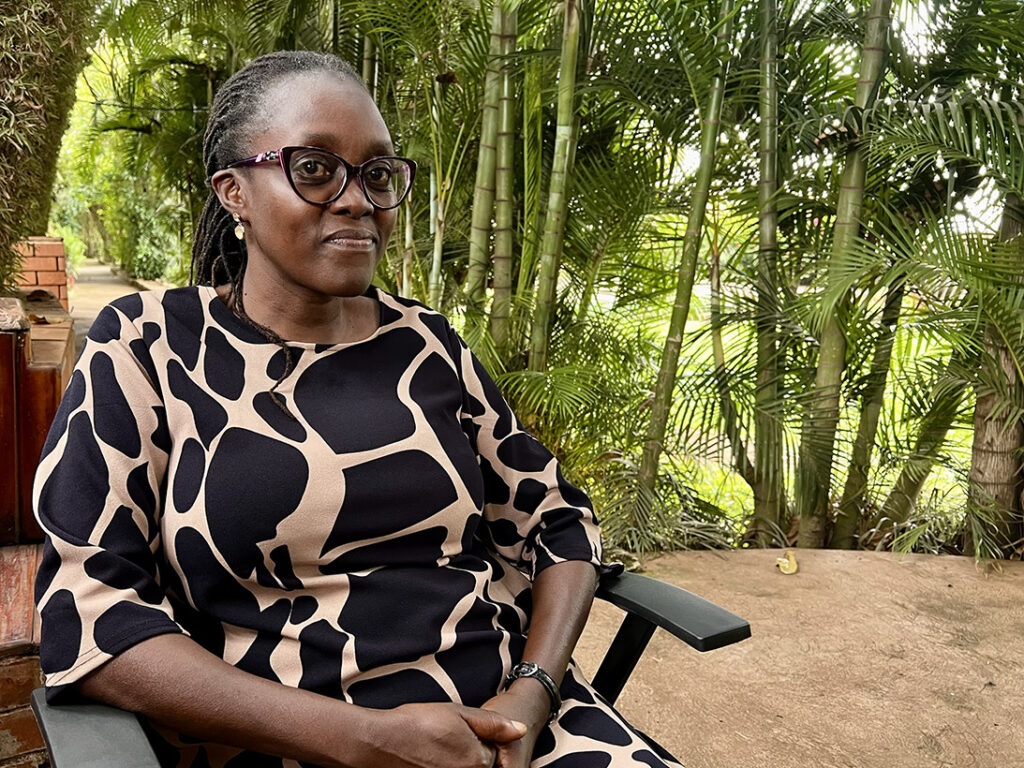
For more than two decades, Linda Kibombo has watched Uganda’s newsrooms change. She has worked her way through radio and television, taken on leadership responsibilities, and mentored journalists coming behind her. But behind the years of experience, the stories and the career milestones is another story, one about what it takes for a woman to survive in an industry where power is not always evenly distributed.
It is a story about harassment. It is a story about silence. And it is a story about resilience.
When the newsroom is not always safe
Newsrooms are supposed to be places where journalists pursue truth, ask difficult questions, and hold people in positions of power accountable, but for some journalists, the newsroom itself can become difficult to navigate.
Sexual harassment can take many forms, from inappropriate comments and unwanted advances to abuse of authority and situations where someone’s career can feel dependent on how they respond to a person in power.
For women, speaking out can come with its own risks.
Will they be believed?
Will they be labelled difficult?
Will speaking up affect their opportunities?
Will the person responsible face consequences?
These questions can keep people silent, and yet silence can allow the behaviour to continue.
The cost of silence
Linda’s reflections point to a newsroom culture where harassment cannot be treated as an isolated incident.
It is also about power, about who gets heard, about who gets protected, and it is about whether institutions are prepared to act when someone crosses the line.
For a journalist trying to build a career, reporting harassment can feel like a gamble, particularly where the person involved is senior, influential or closely connected to management.
That is why policies alone are not enough.
A newsroom can have a sexual harassment policy sitting in an employee handbook and still fail its journalists if nobody knows how to use it, where to report, or whether the complaint will actually be acted upon.
Staying in the newsroom
Linda’s 24-year journey also raises another question: What does it take for women to stay?
Across the media industry, women continue to face challenges that affect their ability to remain and advance in journalism.
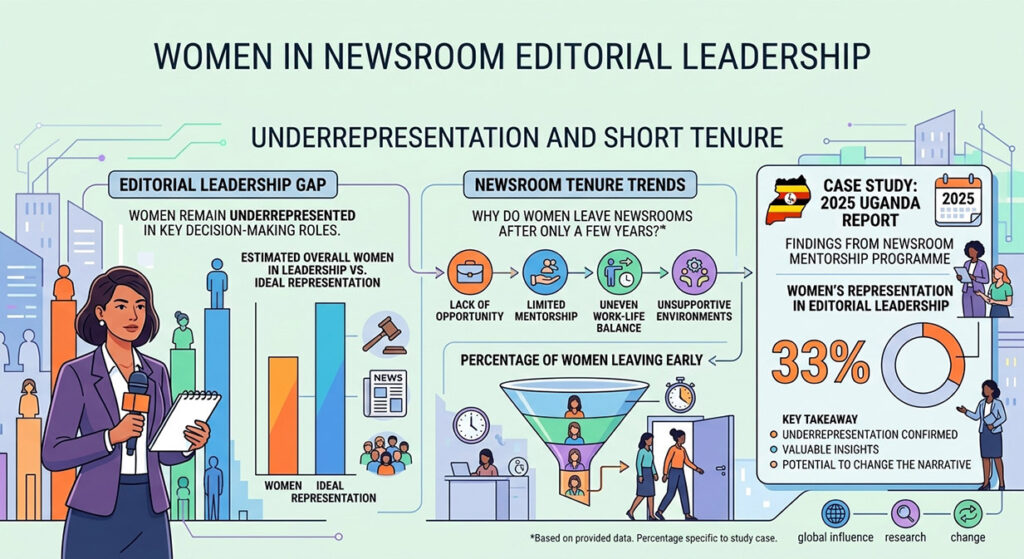
Women remain underrepresented in editorial leadership, while many leave newsrooms after only a few years. A 2025 report on a newsroom mentorship programme in Uganda found women’s representation in editorial leadership at 33 per cent.
For Linda, survival has meant more than simply staying employed. It has meant learning how to navigate difficult newsroom dynamics, build confidence, and eventually help other women find their footing.
Her role as a mentor reflects that commitment. Linda was recognised by the Uganda Media Women’s Association for mentoring upcoming journalists and has since participated in programs designed to strengthen women’s leadership in newsrooms.
When survival becomes leadership
The other side to surviving a difficult system is that you choose to become part of changing it. Linda’s journey from journalist to senior newsroom professional and mentor shows the importance of having women who remain in the industry long enough to challenge its culture and open doors for others.
Mentorship matters because young journalists often enter newsrooms without knowing how to navigate power, negotiate boundaries, or respond when those boundaries are crossed. Sometimes, what they need is not another journalism lesson. They need someone who has been there.
Someone who can say: This is not okay. You are not alone.
Beyond policies
The responsibility for enabling safer newsrooms cannot rest on individual journalists. It belongs to newsroom leaders and media organisations. Policies must be visible, and reporting mechanisms must be accessible. Complaints must be handled confidentially and fairly, and perpetrators must be held accountable regardless of their position. Most importantly, newsroom leadership must make it clear that harassment will not be tolerated because when leaders remain silent, silence itself becomes part of the culture.
A newsroom worth staying in
Linda Kibombo’s story is ultimately not only about what women have endured in journalism. It is also about what can change.
A safer newsroom is one where a young female reporter does not have to choose between her dignity and her career. It is one where speaking up does not make her the problem. It is one where leadership is not determined by gender, intimidation or who has the most power in the room. And it is one where experienced journalists like Linda do not have to simply teach the next generation how to survive.
They can help build a newsroom where survival is no longer the measure of success. Because journalists should not have to endure harm to prove they belong.
Watch this Newsroom edition of Linda
No Safety, No Story.